
How Dating App Algorithms Read Your Photos: What Tinder, Bumble and Hinge Actually Learn (2026)
Tinder, Bumble and Hinge all say they learn from your photos, not just your bio. What each platform confirms, what Elo really was, and how to build a photo set that signals the right thing.
ON THIS PAGE
You have probably read that Tinder assigns you a hidden desirability score out of 1400, that right swipes add 25 points, and that deleting your account resets the whole thing. Almost none of that is true, and the parts that were once true stopped being true in 2019. Meanwhile something else is happening that most guides skip entirely: all three major apps now say, in their own documentation, that they read the content of your photos.
This guide takes the platforms at their word. It quotes what Tinder, Hinge and Bumble actually publish, separates those statements from the folklore that circulates about them, and then does the part that matters for you: explains what a photo set communicates, and how to build one that signals what you intend.
Two boundaries up front. No dating app publishes its full ranking formula, so nobody who claims to know the exact weights is telling you the truth. And where this article moves from what a platform said to what it probably implies, the inference is labelled as an inference rather than dressed up as fact.
#Quick Answer: What Each Platform Actually Confirms
| Platform | What it officially says it uses | What you can control |
|---|---|---|
| Tinder | Activity and simultaneous activity, proximity, age and distance preferences, interests and lifestyle fields, anonymized cues from photos, Likes and Nopes | When and how often you open the app, your photo content, how selective you are, your profile fields |
| Hinge | Preferences and dealbreakers, past behavior, mutual likelihood, a 2025 deep-learning recommender, capped free likes | Your prompt answers, which specific photo or prompt you like, how deliberately you browse |
| Bumble | Stated preferences, similar interests, dating intentions, communities, previous matches for the For You feed | Your interest badges, dating intentions, profile completeness, photo count, activity |
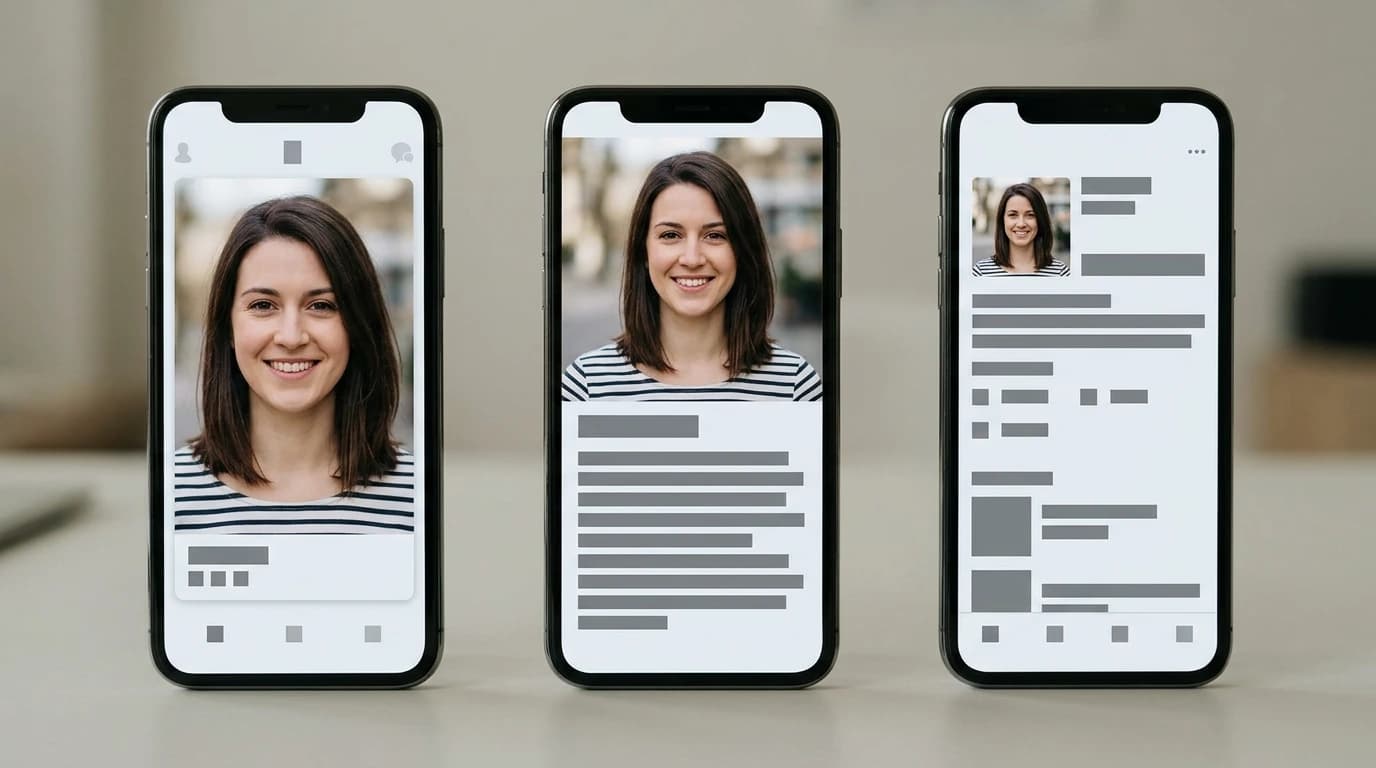
Three things are consistent across all three apps. Photos carry weight beyond their swipe rate, because the platforms describe learning from photo content. Behavior beats biography, because every recommender learns from what you actually do rather than what you claim to want. And recency matters, because none of them want to spend impressions on someone who will not reply.
#First, the Myth That Won't Die: Elo
#What Elo actually was
Elo is a chess rating system, designed by Arpad Elo, that estimates relative skill from match results. Tinder adapted the idea in its early years: a profile that collected more right swipes rose in the ranking, and profiles of similar rank were shown to each other. A 2016 Fast Company investigation was shown one reporter's internal score, which confirmed the system existed and made it famous.
That is where most of the internet stopped reading.
#When Tinder retired it, and what replaced it
In March 2019 Tinder published a post titled "Powering Tinder" that addressed the score directly:
"Elo is old news at Tinder. It's an outdated measure and our cutting-edge technology no longer relies on it."
The same article described the replacement as "a dynamic system that continuously factors in how you're engaging with others on Tinder through Likes, Nopes, and what's on users' profiles." That help page is still live, and was updated on 22 October 2026 with the same language intact.
So the ranking did not disappear. The single vertical score did. What remains is closer to a recommender system: it predicts who you are likely to like and who is likely to like you back, rather than placing you on a leaderboard of attractiveness.
#Why the point tables you see online are invented
Search for Tinder algorithm today and you will find tables like this: starting score 1400, right swipe +25, left swipe −25, match +50, message +20, report −100. They are formatted to look authoritative. They are not.
Tinder has never published a points table, and the company has explicitly said it no longer runs the system those numbers describe. The numbers appear to be a game of telephone that started with speculation about how a chess-style rating might work, then hardened into a citation. That is how most unsourced numbers become common knowledge: someone formats them as a table, and the table gets quoted.
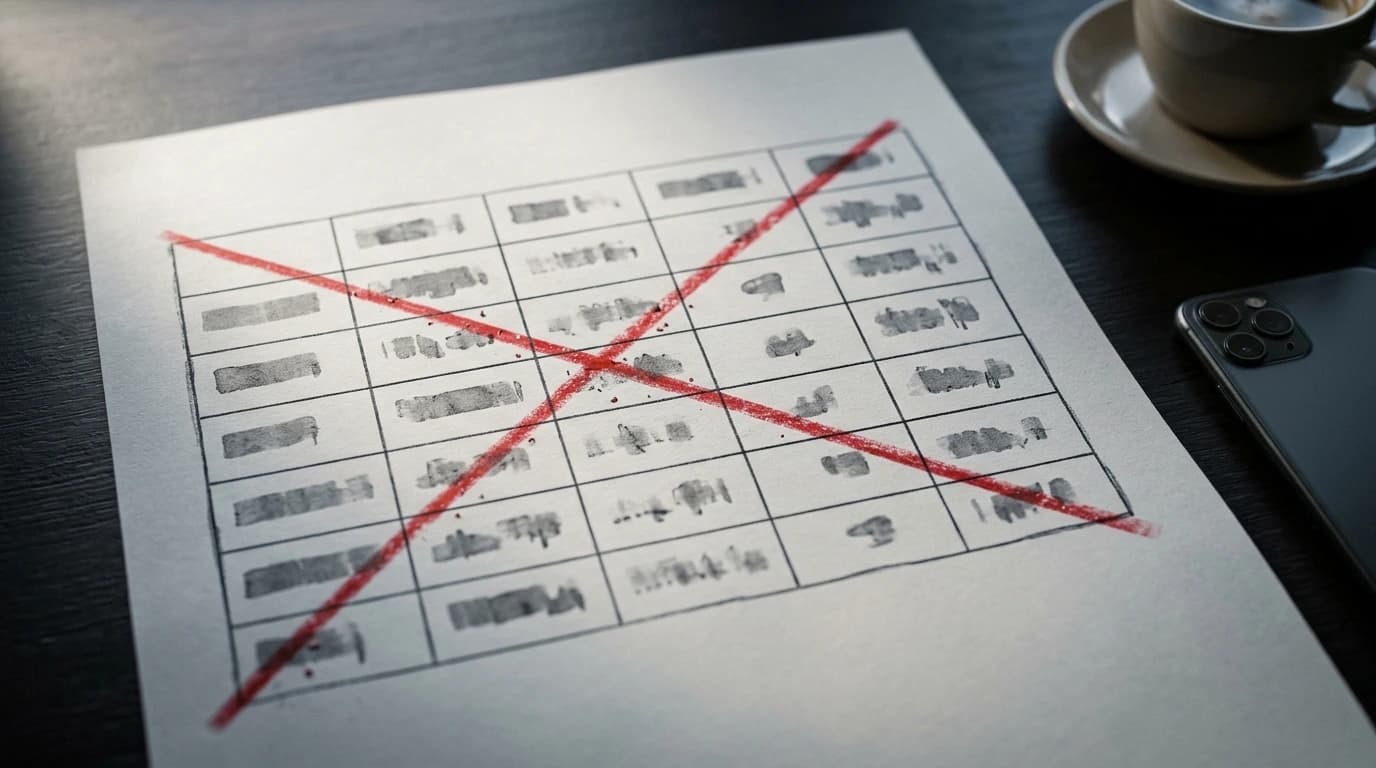
The practical consequence: every strategy built on "protecting your score" is aimed at a mechanism that is not running. Being picky does not raise a hidden number. It does something more useful, which the next section covers.
#What Tinder Says It Learns
#Activity, and simultaneous activity
If you searched for how the Tinder algorithm works and landed on a page full of point tables, this section is the correction. Tinder is unusually direct about its strongest signal:
"We prioritize potential matches who are active, and active at the same time... Using the app regularly helps members be more front and center, see more profiles and make more matches. This is the most important part of our algorithm — and it's totally in our members' control."
Read that twice, because it reframes most advice. The platform is telling you that its top-weighted factor is showing up while other people are also showing up. Not your jawline, not your job title, not whether you pay for Gold.
In practice this means a profile used in ten-minute sessions several times a week will generally outperform an identical profile opened once a fortnight for an hour. Both have the same photos; only one is available when the pool is live.
#Anonymized cues from photos
This is the sentence that most guides skip:
"Beyond using what members tell us, we use anonymized cues from photos to help tailor recommendations. We'll suggest profiles with similar photos to ones members have Liked before, and show their profiles to more people who have Liked members with photos similar to their own."
Three things are being claimed here. Your photo content is an input. Similarity between photo content is computed. That similarity shapes both who you see and who sees you.
What is not stated is how. Tinder does not say whether the cue is scene type, activity, colour palette, composition, presence of other people, or something else. So treat the mechanism as undisclosed and the direction as confirmed: the app is not only counting how many people swiped right on a photo, it is reading what the photo contains.
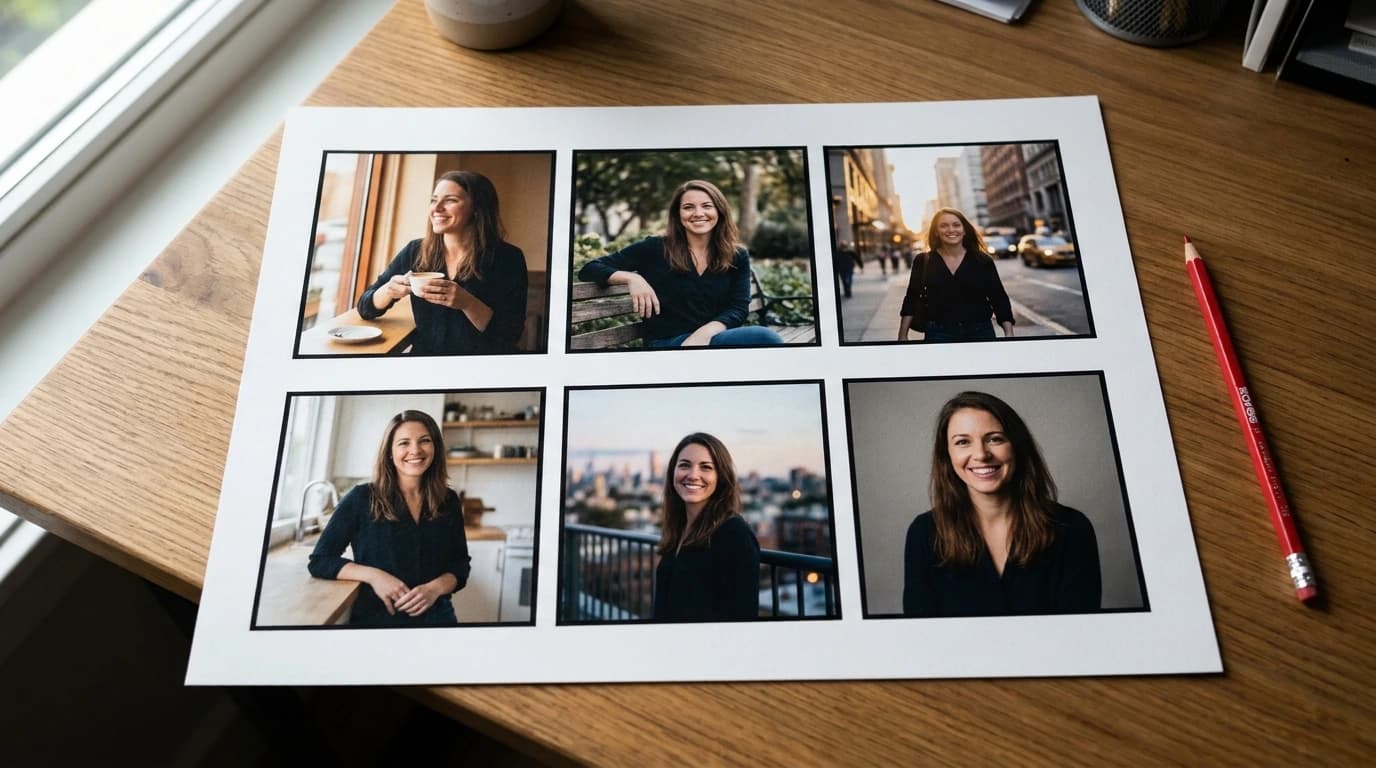
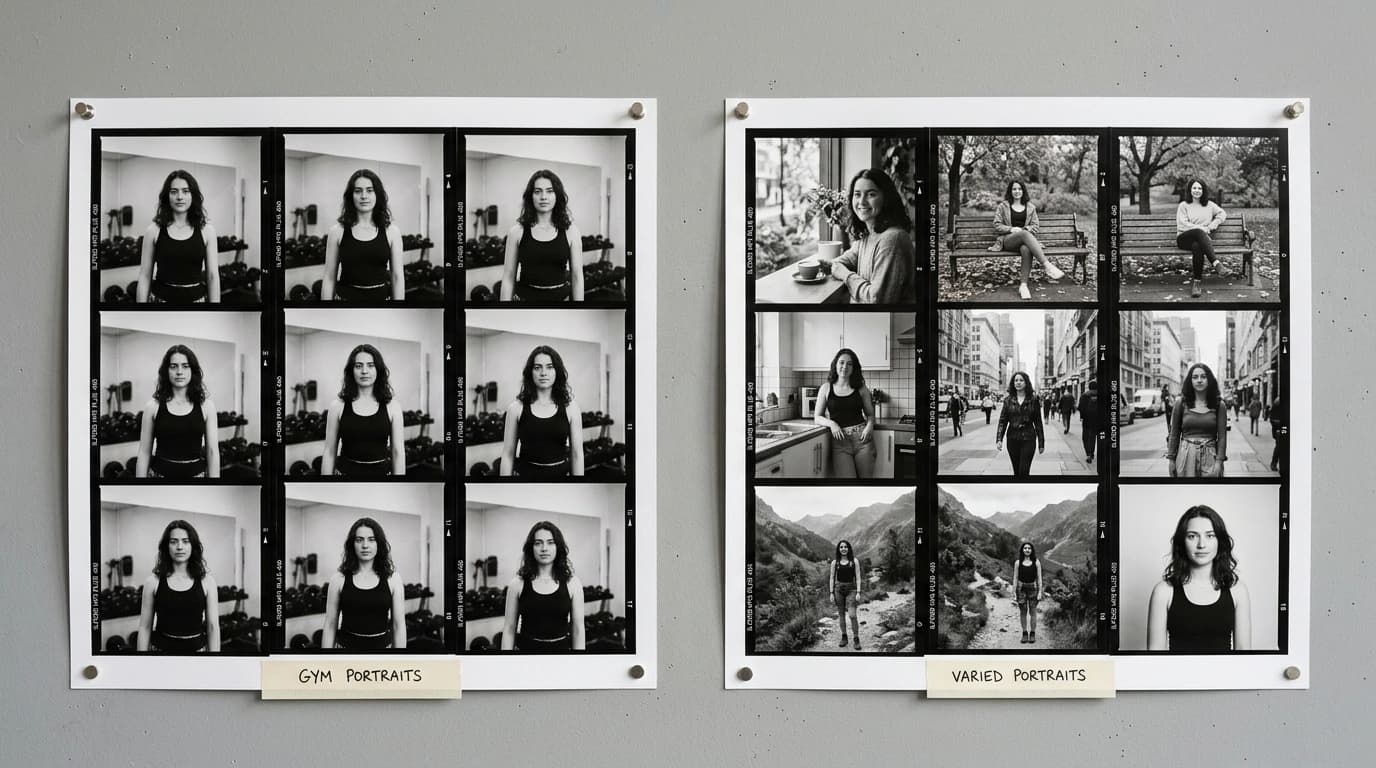
For you, the inference is straightforward and worth stating plainly: a photo set is a description of your life written in a format the system can read. If all six photos are gym mirror selfies, you have described one narrow thing six times.
#Likes and Nopes as preference data
Tinder also says it is "constantly honing the potential matches members see based on how often their profile — and all profiles in their area — are Liked or Noped." Note the two-sided reading: your outgoing likes teach the system your taste, and the incoming likes on your profile shape who else sees you.
This is why indiscriminate right-swiping is counterproductive without any penalty being involved. If you like everyone, the system cannot distinguish what you actually want, so the recommendations it builds are noise.
#What changed in 2026
At its March 2026 product event, Tinder announced several additions that matter here. Chemistry, an AI personalisation layer, moved from Australia and New Zealand into the US and Canada: it produces a daily curated recommendation based on a questionnaire and, optionally, a Camera Roll Scan that derives interests and lifestyle themes from your photos. Learning Mode was described as a system that gathers feedback faster for new and returning users so recommendations become relevant sooner.
The direction of travel is clear. Tinder is investing in reading more about you, from more sources, including your camera roll if you allow it. Photo literacy is becoming more valuable, not less.
#What Hinge Says It Learns
#A recommendation system, not an algorithm
Hinge's own explanation makes a distinction most coverage ignores: what runs the app is not one algorithm but "a collection of algorithms we call a recommendation system," combining stated preferences with activity.
Their reasoning is worth quoting because it explains why profiles matter more on Hinge than elsewhere: "preferences alone can't capture the full picture of compatibility."
#The 2025 deep-learning layer
In 2025 Hinge introduced what it describes as a new deep-learning recommendation system, built to understand both who you might like and who is likely to like you back. That is a meaningful change from the Gale-Shapley framing the company used for years, and it means older guides describing Hinge purely as a stable-matching engine are out of date.
On Gale-Shapley itself: Hinge has long described its matching as based on the 1962 stable marriage solution, and its founder has repeated the claim. The underlying work won the 2012 economics Nobel. But this is a company describing its own system, not an independent audit, so treat it as Hinge's account rather than a verified architecture.
#Why eight likes, and why it matters more than it sounds
Hinge states that research led it to cap free likes at eight per day, on the finding that members with more free likes had worse matches. The company's framing is signal quality: a handful of considered likes tells the recommender something, while a flood tells it nothing.
You do not have to accept the commercial framing to accept the mechanism. Every recommender in this article improves with cleaner preference data, and selectivity is the cheapest way to produce it.
#The speed warning most people scroll past
Hinge publishes a piece of advice that is easy to miss and unusually specific:
"When you skip a profile too quickly, our recommendation system may assume that person (and others like them) isn't your match, even if they could be."
That is a platform telling you, in plain language, that dwell time and attention are inputs. It also means the fast-swipe habit is not neutral. It is training the system against a category of person, one glance at a time.
Hinge makes the complementary point too: "If you send too many likes, we can't tell what you truly want. At the same time, if you rarely send likes, we don't have enough information to learn from."
#What Bumble Says It Learns
#For You, formerly Best Bees
Bumble's curated feed was launched as Best Bees and renamed For You in 2024. It shows up to four profiles per day, chosen from your stated preferences and your previous matches.
Two details from Bumble's own documentation are more interesting than the feature itself. First, the feed is gated: you need at least one match before it unlocks, because the selection draws on match history. Second, free users get one like per week that can be used on a Best Bee, and unused likes do not roll over.
Bumble also describes its broader Discover experience as surfacing people based on similar interests, dating intentions and communities. That is a content-led model rather than a behaviour-led one, which is why interest badges and intention fields carry more weight on Bumble than on Tinder.
#The incognito trade-off
Bumble states plainly that if you use Incognito mode, you will not appear in anyone's Best Bees. That is a clean example of a visibility decision most users make without noticing the cost: hiding from the feed also removes you from the most targeted part of it.
#What this means for photos
Bumble's public statements are lighter on photo mechanics than Tinder's. What it does say is that profile completeness and photo count matter, and its own product communication has noted that adding more photos correlates with better outcomes. The reasonable reading is that Bumble rewards a complete, coherent profile more than a single strong image, and that the For You feed is where a consistent set pays off most.
#The Photo Signal: What a Set Communicates
This is the section no competing guide covers, so it deserves the most care. Everything below the platform quotes is interpretation, and it is marked as such.
#Consistency beats a single great photo
A dating profile is not a portfolio. It is a set of claims about a person, and the set is judged as a whole.
The practical test is simple. Put your six photos side by side and ask what a stranger would conclude about your week. If the answer is "they go to this one bar, in this one shirt, with this one expression," the set is not doing its job even if each individual frame is sharp and well lit.
Consistency here means a consistent person, not a consistent backdrop. Same face, same age, same general build, recognisably the same life. Within that, variety is the point.
#The four signals a set can send
Across the photos, four kinds of information tend to come through, whether you intend them or not:
| Signal | What it is carried by | Why it matters |
|---|---|---|
| Setting | Location type, indoor or outdoor, public or private | Suggests lifestyle and how you spend time |
| Activity | What you are doing, or visibly about to do | Gives a conversation opening and shows energy |
| Social context | Whether others appear, and how | Signals trustworthiness and social proof |
| Warmth | Expression, eye contact, body openness | The fastest read, and the one AI most often gets wrong |
A set that covers all four reads as a person. A set that repeats one column reads as a stock image library.
#Why six similar photos teach the system nothing
If a recommender builds a model of what you are like from photo content, six variations of the same scene give it one data point. Six variations of the same scene also give a human viewer one data point, so the cost is not only algorithmic.
The reverse is not true either: six totally unrelated photos do not create richness, they create incoherence. A rooftop bar, a mountain summit, a formal gala, a beach, a wedding and a gym, with different hair lengths and different facial hair, reads as a compilation rather than a person. The target is a set that is varied in setting and consistent in identity.
#The mismatch problem
There is a failure mode that no algorithm punishes and real life punishes hard. You can build a set that signals a life you do not have: yacht decks, alpine lodges, gallery openings. The photos may perform well. The first date then has to reconcile the profile with the person.
The same logic applies to AI-generated images, and it is the strongest argument for restraint. A generated photo is a claim. If the claim is "I look like this in good light," it holds. If the claim is "I live like this," it eventually fails.
#Verification Changes the Math
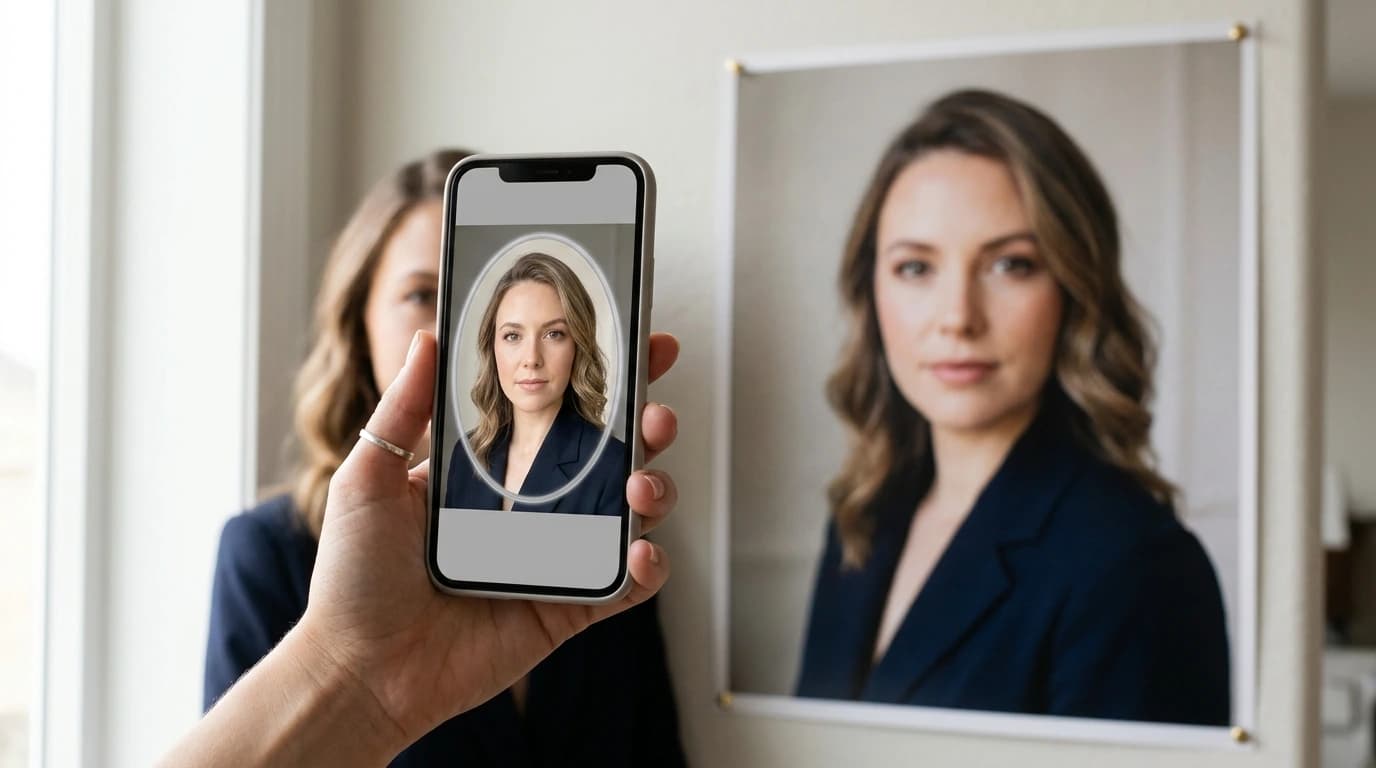
#What Face Check compares
Tinder now runs three related but distinct verification products, and the differences matter:
- Photo Verification is optional. You submit a short video selfie, and it is compared with your profile photos using facial recognition.
- ID plus Photo Verification is optional, and additionally checks a government ID against your profile photo.
- Face Check is mandatory for new users in a growing list of markets. It is a liveness and facial-scan step that also assists with age estimation, and Tinder states it can detect when the same face is used across multiple accounts.
Tinder is explicit that verification is not permanent: the help page states you may be required to go through the process again if you delete one or more profile photos, and that new photos uploaded after verification may affect your status.
That single sentence has a consequence most people miss. Your photo set and your verified face are linked. You cannot treat them as separate assets.
#The 67% figure, and its limits
Tinder's ID verification pilot in Australia and New Zealand was reported in early 2024 as producing 67 percent more matches for verified accounts. The number is widely quoted. It is worth being precise about what it is: a company-reported outcome from one pilot, comparing verified accounts with unverified ones.
That is a correlation with at least three plausible explanations. Verified users may be more committed to the app, may have completed more of their profile, or may simply be more attractive on average in ways the pilot did not control for. The honest reading is that verification is associated with better outcomes and is also a trust signal to the person viewing you, which is reason enough to complete it.
#Why a mismatched AI photo is a liability
Put the two facts together. Verification compares a live face with your profile photos. Generated images that drift from your actual features, age or skin tone create a gap exactly where the system is looking.
And the gap is not only technical. A viewer who has been trained by years of AI images will notice the tell. Our guide to AI headshot authenticity covers the specific giveaways, and they apply at least as strongly in dating, where the whole profile is a promise about a person you are about to meet.
#Building a Set That Signals Correctly
#The five-signal checklist
Before you change anything, audit what you have. For each of your current photos, mark which signals it carries:
- Face legibility. Can a stranger identify you in under a second at thumbnail size?
- Setting variety. Do at least three distinct locations appear across the set?
- Activity. Is there at least one photo of you doing something, not only posing?
- Social context. Is there at least one photo with other people, where you are clearly identifiable?
- Truthfulness. Would every photo hold up if the person met you tomorrow?
A set that misses two or more of these is not a photo quality problem. It is a description problem, and no amount of sharpening fixes it.
#When to use AI, and when not to
AI is genuinely useful for three things in a dating profile: fixing lighting you cannot recreate, producing variety in settings without booking six shoots, and giving you enough frames to choose from rather than settling for the one acceptable selfie.
It is a bad idea for three others: changing your apparent age, changing your body, and inventing scenes that imply a lifestyle you do not have. It is also a bad idea to build the entire set from generated images, both because the repetition becomes visible and because the verification step compares against your real face.
Our guide to taking photos for an AI headshot generator covers the input side, including why a mix of expressions and angles produces a more useful output than fifteen near-duplicates.

#A 30-minute workflow
- Collect what you have. Every photo of yourself from the last eighteen months, no filtering yet.
- Cut anything that fails truthfulness. Different hair era, heavy filter, obvious old age. This is the step people skip and regret.
- Tag by signal. Setting, activity, social, warmth. You are looking for coverage, not perfection.
- Identify the gap. Most sets are strong on warmth and weak on activity and social context.
- Fill only the gap. Generate or shoot two or three photos aimed at the missing signal, not six new ones.
- Order for the thumbnail. Whatever reads best at 100 pixels goes first, regardless of how much you like the photo.
- Live with it for two weeks. Change one variable at a time, or you will not know what worked.
#What Moves the Needle, and What Doesn't
#Six levers that genuinely matter
| Lever | Why it works | Effort |
|---|---|---|
| Being active when others are active | Tinder names this as its most important factor | Low |
| A set that covers all four signals | Gives both the recommender and the viewer more to work with | Medium |
| Being selective with likes | Produces clean preference data instead of noise | Low |
| Slow browsing rather than fast swiping | Hinge states that fast skips are read as a signal | Low |
| Completing verification | Removes doubt and aligns with the system's comparison | Low |
| A first photo that reads at thumbnail size | It is the only frame most people will ever see | Medium |
#Six myths that refuse to die
"You have a hidden score you can raise." There is no single score. Tinder retired Elo in 2019.
"Deleting your account resets everything." It resets the history the system had about you, which is the opposite of an advantage. It also conflicts with Tinder's one-account rule and is exactly what Face Check is built to detect.
"Right-swiping everyone saves time." It destroys the preference signal the recommender needs, and most of those likes will not be returned.
"Paying for premium buys ranking." Subscriptions buy features: who liked you, extra likes, boosts. A boost increases how many people see your card for a short window, which only helps if the card is worth seeing.
"There is one magic hour to use the app." Simultaneous activity matters, but no platform publishes a window, and the pool differs by city and by day.
"AI photos are either fine or banned." Neither. What the platforms care about is accuracy of representation, and what your date cares about is the same thing.
#Frequently Asked Questions
#Does Tinder still use an Elo score?
No. Tinder published a statement in March 2019 saying that Elo was, in its own words, old news and that the platform no longer relies on it. The current help page, updated in October 2026, repeats the same position and describes a dynamic system based on how people engage through Likes and Nopes and what is on their profiles. Any guide that gives you a starting score of 1400 and plus or minus points per swipe is presenting invented numbers, because Tinder has never published a points table.
#What does Tinder mean by anonymized cues from photos?
In its official matching article, Tinder says it uses anonymized cues from photos to tailor recommendations, suggesting profiles with similar photos to ones you have liked, and showing your profile to more people who have liked profiles with photos similar to yours. Tinder does not explain which features it extracts or how they are weighted. The practical reading is that the content and style of your photos, not only their swipe performance, feed into who sees you.
#Does Hinge use a Nobel Prize algorithm?
Hinge has described its matching as based on the Gale-Shapley algorithm, a 1962 solution to the stable marriage problem, which is the work behind the 2012 economics Nobel. That framing comes from Hinge itself and its founder, not from an independent technical audit. In 2025 Hinge stated it introduced a new deep-learning recommendation system, so the honest description today is a hybrid: a classical matching concept plus machine learning on top of it.
#Why does Hinge limit free likes to eight?
Hinge has said that eight is the number its research settled on: when members had more free likes per day their matches got worse, and when they had fewer they were paying to send more. The company frames it as a signal-quality decision rather than a scarcity tactic. Whatever the commercial motive, the behavioural advice that follows is sound, because a small number of considered likes gives any recommender clearer information than indiscriminate swiping.
#What is Bumble's For You feed?
For You is Bumble's curated daily feed, previously called Best Bees. It shows up to four profiles selected from your stated preferences and your previous matches. You need at least one match before the feature unlocks, and you only get one free like per week that can be used on a Best Bee. If you switch on Incognito mode, your profile stops appearing in anyone else's For You feed.
#Do AI-generated dating photos hurt your matches?
They can, for two reasons the platforms themselves describe. First, Tinder's verification system compares a live video selfie with your profile photos, and you may be asked to verify again if you remove photos, so a generated image that does not resemble your face creates a mismatch. Second, a set built on a lifestyle you do not have sets an expectation that collapses on the first date. AI is useful for lighting, framing and variety; it becomes a liability when it changes who you appear to be.
#How many photos should a dating profile have?
Six is the practical number on Hinge, which builds its profiles around six photos or videos plus prompt answers, and it is a sensible target elsewhere. Fewer than four leaves too little for a recommender to read and too little for a person to judge. More than six rarely adds new information unless each photo shows a genuinely different side of your life.
#Why do I get no matches even though my photos are good?
Good is not the same as legible. Three things commonly go wrong: the set sends one repeated signal, so the system learns little about you; the first photo does not read at thumbnail size; or the profile is inconsistently active, which matters because Tinder states plainly that activity and simultaneous activity are the most important factors it weighs. Before assuming a penalty, check whether your last active session was days ago.
#Is deleting and recreating my account a real reset?
No, and it is riskier than it looks. There is no score to reset, so the main effect is losing whatever history the system had built about who responds to you. Tinder also requires one account at a time, and Face Check is designed to detect the same face across multiple accounts. A quiet profile is almost always a ranking and recency problem, not a punishment you can escape with a new account.
#Conclusion
The dating app algorithm is not a lock to pick. It is a recommender trying to answer two questions: who will you like, and who will like you back. Almost everything you can influence feeds one of those questions.
What the platforms actually say, once the folklore is stripped away:
- Elo is gone, retired in 2019 and not replaced by another public score. Strategies built on raising or protecting it are aimed at nothing.
- Activity is the top lever, stated as such by Tinder and implied everywhere else. Being present when the pool is present costs nothing.
- Photos are read, not just counted. Tinder confirms anonymized cues from photo content; Hinge confirms attention and dwell time; Bumble confirms completeness and interest signals.
- Selectivity is information. A small number of deliberate likes or a slow browse teaches the system more than a hundred reflexive swipes.
- Verification ties your photos to your face, which makes accuracy a practical requirement rather than an ethical abstraction.
The part that no algorithm can do for you is the part that decides whether the match becomes a date: a set of photos that describes a real person accurately, in enough variety to be interesting, and in a way that survives being seen at 100 pixels and then in person.
Build a set you can actually stand behind with the Nothron Neural Headshot Generator — then check the likeness before you publish it. See the current pricing for package details.
#Methodology and Sources
This article is built on primary statements published by the platforms themselves, cross-checked against contemporaneous reporting. Where a claim comes from a company describing its own system, the text attributes it rather than presenting it as independently verified. Where this article interprets what a platform statement implies, the interpretation is marked.
No search volume, ranking data or traffic figures are claimed here. No original survey was conducted.
Primary sources, all checked 26 October 2026:
Some platform help centres block automated retrieval, so a direct request may return a 403 even when the page is publicly readable in a browser. Every source below was read in full during research.
- Tinder — Powering Tinder: The Method Behind Our Matching. Help article, updated 22 October 2026. Source for the activity statement, the anonymized photo cues passage, the Likes and Nopes description, and the explicit retirement of Elo.
- Tinder — Photo Verification. Updated 22 October 2026. Source for re-verification after deleting photos.
- Tinder — Photo Check data and privacy information. Source for Face Check, FaceMap and FaceVector handling, and duplicate-account detection.
- Tinder — Sparks 2026 product keynote. 12 March 2026. Source for Chemistry, Camera Roll Scan and Learning Mode.
- Tinder UK — Face Check launch. 26 March 2026. Source for mandatory Face Check in the UK and cross-account detection.
- Hinge — How We Connect Daters. Source for the "recommendation system" framing, the 2025 deep-learning system, and the fast-skip warning.
- Hinge — What is Most Compatible?. Updated 27 July 2026. Source for the daily recommendation and 24-hour expiry.
- Hinge - Mission. Source for the eight-likes rationale and the Gale-Shapley description, both company claims.
- Bumble — How does Bumble work?. Bumble Help Center. Source for Discover, preferences and interest badges.
- Bumble — Bumble Premium features. Source for the Best Bees description, the four daily profiles, the weekly free like and the Incognito exclusion. Bumble has reorganised its product pages for this feature more than once, so the landing URL may move; the underlying facts are Bumble's own description and were confirmed on 26 October 2026.
Reporting and secondary sources:
- The Verge, 15 March 2019 — contemporaneous coverage of Tinder retiring Elo.
- Fast Company, 2016 — the investigation that made Elo famous.
- Biometric Update, February 2024 — the 67 percent figure from the Australia and New Zealand verification pilot.
- TechCrunch, July 2018 and Fortune, January 2024 — Hinge's Gale-Shapley framing and its denial of an attractiveness score.
Limitations stated in this article: no platform publishes its full ranking formula, so the relative weights of the factors described here are unknown. The photo-signal framework in this article is an interpretation of platform statements about photo content, not a published mechanism. The 67 percent verification figure is a company-reported correlation from a single pilot, not a controlled causal result.
This is general information about how dating platforms describe their recommendation systems, not legal or platform-policy advice. Product behaviour, policies and market availability change frequently. Check the current help pages for the platform and country you use.
#Explore Other Nothron Tools
Nothron is not just a headshot generator — it is a complete AI photo studio:
#AI Tools
- Nothron Neural Engine — Sharpen, upscale, and clean up a low-resolution photo
- Nothron Natural Glow — Improve skin tone without making the face look artificial
- Nothron Legacy Touch — Restore an older photo before you rebuild your set
#Photo Editing Tools
- Photo Editor — Adjust brightness, contrast, and background details
- Free Online Image Cropper — Crop to the ratio each app expects
- Free Online Circle Cropper — Preview how a photo reads as a circular avatar
- Free Online Photo Resize Tool — Resize without losing sharpness
#Dashboard Tools
- Nothron Neural Headshot Generator — Create dating and professional portraits with AI
- Dashboard Neural Engine — Advanced AI photo enhancement
- Dashboard Natural Glow — AI-powered skin tone enhancement
- Dashboard Legacy Touch — AI old photo restoration
#Other Blog Posts
- Dating App Photo Guide 2026 — Platform specs, crops and composition rules
- Tinder Shadowban Test and Photo Audit — Tell a real penalty from a weak profile
- Dating App Profile Photo Guide — Building the six-photo set
- Best Dating App Profile Pictures — What actually moves match rates
- How to Take Photos for an AI Headshot Generator — The 10–15 photo checklist
- Should You Smile in Your Headshot? — Expression, warmth and cultural norms
- AI Headshot Authenticity and LinkedIn Rules — Likeness, disclosure and platform policy
- Photo Cropping Guide — Ratios and circular crops
#Author Biography
Nothron Team is a group of AI and photo editing specialists building an AI headshot generator and photo studio that anyone can use. The team focuses on likeness fidelity, natural skin texture and platform-ready output, and writes about how photo quality is actually assessed by the platforms people use — separating what companies publish from what the internet assumes.
Nothron Team
The Nothron team turns experience in AI, computer vision and professional photography into a photo studio that anyone can use.
Related articles
Tinder Shadowban 2026: Are You Banned — or Is Your Profile Just Weak?
Oct 20, 2026 · 15 min read
Dating App Profile Photo Guide 2026: 21x More Matches with AI
Jun 18, 2026 · 15 min read
Dating App Photo Guide 2026: Bumble, Hinge, Tinder and Others - The Most Detailed and Ultimate Guide
May 11, 2026 · 18 min read