
Resume Photo in 2026: Country Rules, CV Sizes, and When to Use AI
Should you include a photo on your resume? A country-by-country guide to CV photo rules, sizes, ATS risks, and creating a natural AI headshot.

ON THIS PAGE
Your CV can fail in two very different places: with a human who finds the photo distracting, or with a system that never reads the image properly. The frustrating part is that the rules are not global. A photo that feels completely normal in Madrid can look unnecessary in Manchester. A Bewerbungsfoto that helps in Munich can create legal risk in Berlin. And a photo that looks professional on LinkedIn can be the wrong choice for a passport office.
This guide separates three things that are often mixed together: what the law requires, what local hiring culture expects, and what actually makes a good CV photo. It covers the United States, United Kingdom, Germany, France, Spain, Portugal, and Turkey, then explains sizes, ATS parsing, privacy, and how to create a natural result with AI.
This is general information, not legal advice. Hiring practices and laws change, and individual job ads can set their own requirements. Always check the current official guidance and the instructions in the application.
#Why Resume Photos Are a Country-by-Country Question
A CV photo is not just a picture. It is a signal about how you expect the hiring conversation to work. In some markets, including a photo says “I understand the local application format.” In others, it says “I may have given you information you did not need.” Neither signal is universal.
Three layers matter:
- The legal layer: Is a photo required, prohibited, or simply not addressed? In most of the markets below, it is not legally required for private-sector jobs. That does not mean every employer follows the same practice.
- The cultural layer: Even when the law is silent, local habit can be strong. Germany has the Bewerbungsfoto; Spain has the foto carné; Portugal has the foto tipo passe; Turkey has the vesikalık. These are conventions, not statutes.
- The practical layer: Size, crop, background, expression, and file format determine whether the photo looks professional or amateur. A good photo in the wrong proportions can still hurt.
The safest rule is simple: follow the job ad first, local custom second, and your own preference last. If the ad asks for a photo, include one. If it explicitly says not to, do not. If it says nothing, use the country guidance below and err toward omission in markets where photos are uncommon.
#Quick Answer: Should You Include a Photo?
| Market | Default answer | What to do |
|---|---|---|
| United States | No | Omit unless the employer asks; some creative and client-facing roles are exceptions |
| United Kingdom | No | Omit unless the ad requests one; follow Equality Act considerations |
| Germany | Optional but often expected | Check the ad; a Bewerbungsfoto is customary in many traditional sectors |
| France | Optional, mixed | A photo is common in some sectors but not legally required |
| Spain | Optional but common | A foto carné or professional portrait is widely used |
| Portugal | Optional but common | A foto tipo passe is a familiar format |
| Turkey | Optional but common | Private-sector CVs often include a photo; check the ad and KVKK rules |
Three quick rules:
- Do not confuse a CV photo with an official ID photo. A passport, visa, or biometric ID has strict technical requirements. A CV photo is a presentation image.
- Do not use a photo to fill space. If the photo does not add relevant information, it is not required.
- When in doubt, ask. A short question to the recruiter is better than guessing in a market you do not know.
#CV Photo Rules by Country
The sections below use the same structure: legal status, cultural expectation, common format, and a practical recommendation. The legal note is deliberately cautious. In most countries, the absence of a photo requirement does not mean a photo is forbidden; it means the decision is left to the employer and the candidate.
#United States: Skip It by Default
Legal status. There is no federal requirement to include a photo on a resume. Photos can reveal protected characteristics such as race, age, gender, disability, or national origin, which is one reason many US employers prefer photo-free applications and why some recruiters remove photos from initial screening. The EEOC enforces federal anti-discrimination laws, but it does not impose a universal photo rule; the practical guidance is to avoid unnecessary photo requirements.
Cultural expectation. Low. Photos are uncommon outside acting, modeling, hospitality, and some client-facing creative roles. A photo on a standard corporate or tech resume can feel out of place.
Common format. There is no CV photo standard. The 2 x 2 inch photo used for US passports is an official ID format, not a resume convention.
What to do. Omit the photo unless the job ad asks for one. If you are in a field where a headshot is part of the application, follow the instructions and keep the image professional and current.
#United Kingdom: Usually Omit It
Legal status. There is no legal requirement to include a photo on a CV. The Equality Act 2010 protects people from discrimination based on protected characteristics, and a photo can make those characteristics visible before an employer has assessed your skills.
Cultural expectation. Low. Most UK CVs do not include a photo. Creative, media, and some customer-facing roles may ask for a headshot or a portfolio link, but the ad should make that clear.
Common format. No CV standard. The 35 x 45 mm passport photo is a separate official format.
What to do. Leave it out by default. If the employer requests a photo, use a clean head-and-shoulders image and follow the requested format.
#Germany: Optional, but Often Expected
Legal status. A photo is not legally required for a private-sector application. The Allgemeines Gleichbehandlungsgesetz (AGG) prohibits discrimination on protected grounds, and a photo can reveal some of them. That is why compliance-focused employers and international companies may prefer photo-free applications.
Cultural expectation. High in many traditional sectors. The Bewerbungsfoto is still part of the standard application package in fields such as banking, law, engineering, and small and mid-sized businesses. Startups and international teams are more likely to accept a CV without a photo. Practice varies by region, company size, and industry.
Common format. A portrait around 4.5 x 6 cm (3:4) is a common convention. It is not a legal standard, and a professional headshot crop can work if the ad does not specify dimensions.
What to do. Read the ad carefully. If a photo is requested or the company’s application portal has a photo field, include a current, professional Bewerbungsfoto. If the ad is silent and the company is international or compliance-focused, a photo-free CV is defensible. Do not submit a passport-style biometric photo unless it is specifically requested.
#France: Mixed Expectations, No Legal Requirement
Legal status. A photo is not legally required. The Code du travail prohibits discrimination on a long list of grounds, and a photo can expose information that is irrelevant to the job. Employers should focus on skills and experience.
Cultural expectation. Mixed. Some traditional sectors and smaller companies still expect a photo CV, while many larger organizations and international teams accept a CV without one. Customer-facing roles in retail, hospitality, and some sales teams are more likely to expect a photo.
Common format. A 35 x 45 mm portrait is a common convention, similar to an ID photo but not a legal CV requirement. Keep the crop professional rather than passport-strict.
What to do. Follow the ad. If no photo is requested, you can omit it. If you include one, choose a natural headshot rather than a formal ID image.
#Spain: Common, Not Mandatory
Legal status. There is no legal requirement to include a photo on a CV. Ley Orgánica 3/2007 establishes the principle of equality and non-discrimination, and employers are expected to avoid selection practices that reveal protected characteristics unnecessarily.
Cultural expectation. High. The foto carné is a familiar part of Spanish application culture, and many CV templates include a photo placeholder. It is still a convention rather than a legal obligation, and some modern employers prefer skills-first applications.
Common format. The traditional 26 x 32 mm carné size is common for ID-style photos. CVs often use a slightly larger professional portrait or a 3 x 4 cm crop. There is no single legal CV size.
What to do. A photo is usually acceptable and often expected. Use a current, well-lit portrait with a neutral background; do not simply attach a scanned ID photo.
#Portugal: Common, Not Mandatory
Legal status. A photo is not legally required. The Código do Trabalho sets out anti-discrimination principles, and employers should not request irrelevant personal information.
Cultural expectation. High. The foto tipo passe is widely recognized, and many Portuguese CVs include a photo, especially in traditional sectors and smaller companies. International companies may be more flexible.
Common format. 3 x 4 cm is a common tipo passe convention. It is not a legal CV standard.
What to do. Include a photo if the ad or local convention suggests one. Keep it professional and current; avoid a formal passport image with a strict expression.
#Turkey: Common in the Private Sector
Legal status. Private-sector employers are not generally required by law to demand a CV photo. Public-sector recruitment and some regulated roles may have specific announcement requirements, so read the ad. The Kişisel Verilerin Korunması Kanunu (KVKK) treats a photo as personal data; employers should collect it only when necessary, use it for the stated purpose, and store it securely.
Cultural expectation. High. A vesikalık photo is a familiar part of Turkish CVs, and many job ads explicitly ask for one. A CV without a photo is not automatically rejected, but it can look incomplete in conservative or customer-facing sectors.
Common format. A 4 x 6 cm to 5 x 6 cm portrait is a common CV convention. The 50 x 60 mm biometric format used for official IDs is a different category; do not use a biometric ID photo as a CV photo unless the employer specifically asks for it.
What to do. Follow the ad. If a photo is requested, use a professional portrait with a clean background. If you are applying to an international company or a role that emphasizes skills-first screening, a photo-free CV may be acceptable.
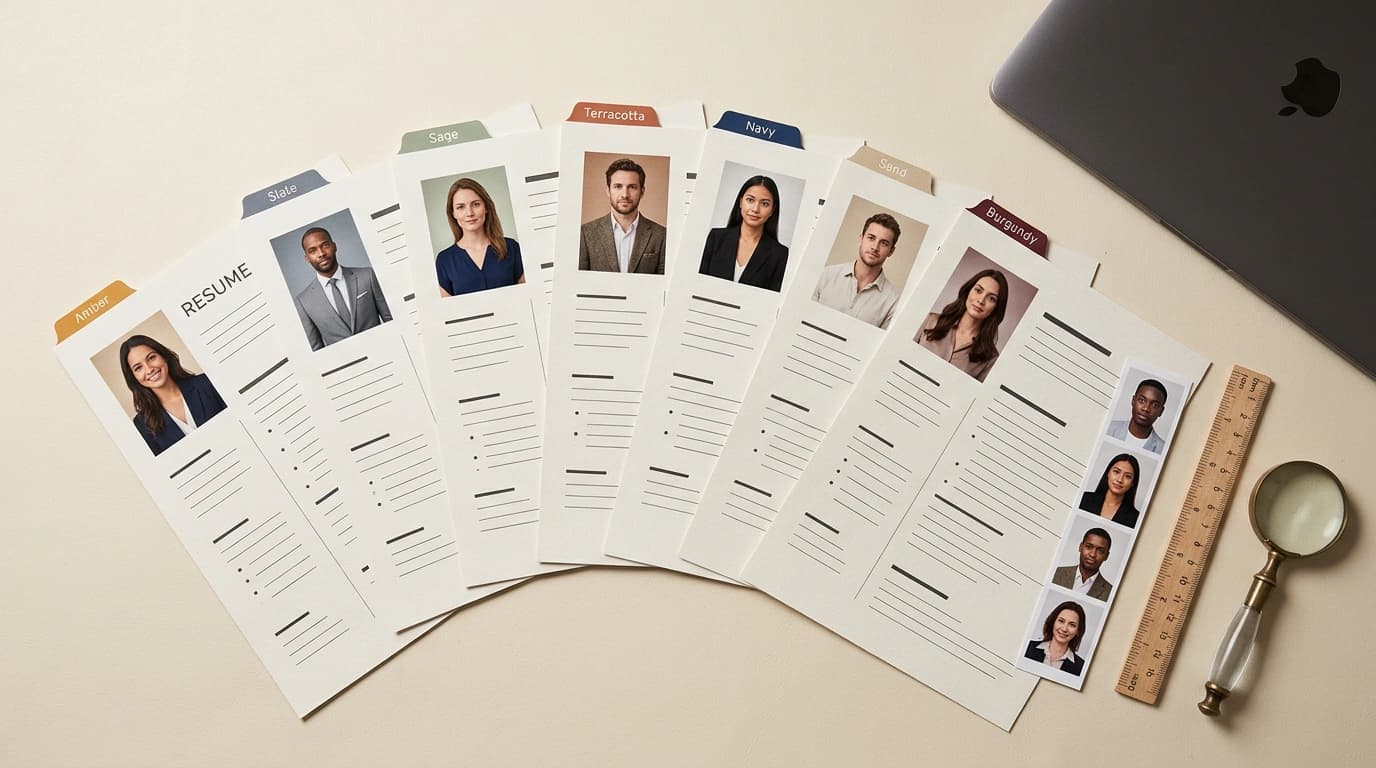
#CV Photo Sizes: What the Numbers Actually Mean
The most important sentence in this section is this: in most countries, a CV photo size is a convention, not a legal standard. The numbers below describe what is commonly used, not what a law requires.
| Market | Common CV photo convention | Legal CV standard? | Note |
|---|---|---|---|
| United States | No photo | No | 2 x 2 inch is a passport format, not a CV format |
| United Kingdom | No photo | No | 35 x 45 mm is a passport format, not a CV format |
| Germany | 4.5 x 6 cm (3:4) | No | Bewerbungsfoto convention; check the ad |
| France | 35 x 45 mm | No | Common portrait crop; not a legal requirement |
| Spain | 26 x 32 mm carné or 3 x 4 cm portrait | No | Foto carné is an ID convention, not a CV law |
| Portugal | 3 x 4 cm | No | Foto tipo passe convention |
| Turkey | 4 x 6 to 5 x 6 cm portrait | No | Biometric ID is 50 x 60 mm and is a separate format |
A few practical points:
- Start with a high-resolution original. Cropping a small image to a new ratio usually makes the face soft or pixelated.
- Keep the face large. A common mistake is leaving too much background around the head, especially when the photo will be printed small.
- Do not stretch the image. Crop to the ratio instead of forcing the dimensions.
- Match the ad if it specifies a size. The employer’s instruction overrides a general convention.
- Use a separate official photo for ID documents. The passport photo guide covers the strict requirements for passports and visas.
If you need to adjust the crop, the Free Online Image Cropper and Free Online Photo Resize Tool can handle the dimensions without a design program.
#Does a Photo Hurt ATS Parsing?
An applicant tracking system, or ATS, is software that helps employers collect, search, and rank applications. Most ATS platforms are designed to read text: headings, job titles, dates, skills, and keywords. They do not “look” at your photo the way a human does.
That leads to three practical conclusions:
- A photo does not give you a positive ATS score. There is no reliable evidence that including a photo improves keyword matching or ranking. The photo is not a substitute for a clear skills section and measurable achievements.
- A photo can complicate some templates. Images can increase file size, and in poorly structured documents they can interfere with text extraction. A text-based PDF with selectable text and standard headings is safer than a heavily designed image-based CV.
- Use the photo field if the portal provides one. If the application asks for a separate headshot upload, use that field instead of pasting a large image into the CV body.
ATS advice is often oversold with guarantees. No one can promise that a particular template will pass every system. The defensible approach is boring: use a clean structure, standard section headings, readable fonts, and a PDF exported from a text-based document. Add a photo only when the ad or local convention calls for it.
#Bias, Privacy, and the Law
A photo is not neutral information. It can reveal race, gender, age, disability, religion, ethnicity, or other characteristics that are protected by anti-discrimination law. That is why many employers remove photos from the first screening stage, and why some countries’ hiring guides recommend photo-free applications even when photos are common.
The legal frameworks differ, but the direction is similar:
- Germany: The AGG prohibits discrimination on protected grounds. A photo can make those grounds visible, so a photo-free application is often the safer compliance choice.
- United Kingdom: The Equality Act 2010 protects protected characteristics. A CV photo is not required, and employers should assess candidates on relevant criteria.
- France: The Code du travail prohibits discrimination on a long list of grounds. A photo is not legally required.
- Spain: L.O. 3/2007 establishes equality and non-discrimination principles. A photo is customary but not mandatory.
- Portugal: The Código do Trabalho sets out anti-discrimination principles. A photo is not legally required.
- Turkey: KVKK treats photos as personal data. Employers should collect them only when necessary and protect them.
- European Union: The GDPR requires a lawful basis, purpose limitation, and data minimisation for personal data, including images.
For job seekers, the practical takeaway is not “never include a photo.” It is “include one only when it serves a clear purpose.” If the ad asks for a photo, provide it. If the ad says nothing and the local market is photo-optional, you are allowed to omit it.
For employers, the safer process is to separate the photo from the initial skills review, limit access to the image, set a retention period, and delete it when it is no longer needed. A photo should not become a back door for bias.
#How to Choose a Resume Photo
A good CV photo does not need to look like a magazine cover. It needs to look current, professional, and consistent with the role. Use this checklist:
- Face size: The face should occupy roughly 60–70% of the frame. If the photo will be printed small, a distant full-body shot will not work.
- Background: Choose a clean, neutral background that contrasts with your hair and clothing. A plain wall, a soft studio backdrop, or a gently blurred office is usually safer than a busy room.
- Lighting: Use soft, even light. A window with diffused daylight is often enough. Avoid harsh overhead light, strong shadows, and flash that flattens the face.
- Expression: A relaxed, natural expression works in every market. A full smile is fine in customer-facing and creative roles; a more composed expression suits legal, finance, and academic contexts.
- Attire: Wear neat, industry-appropriate clothing in solid colors. Avoid loud patterns, logos, and sunglasses. A collared shirt or blazer is a safe default.
- Recency: Use a photo from the last 12–18 months, and update it after a major change in hairstyle, weight, glasses, or facial hair.
- Editing: Keep skin texture and natural features. Heavy retouching, face reshaping, and extreme filters make the photo less trustworthy.
- Consistency: If the photo will appear on LinkedIn, your CV, and a portfolio, use the same image or a close variation. Consistency makes the application feel coherent.
If you are unsure between two photos, choose the one that looks more like you on a normal working day. A CV photo is not a branding poster; it is a professional introduction.
#AI Headshots for Resumes: What Works
AI headshot generators have made professional-looking photos accessible to people who do not have a studio budget or the time for a shoot. That is a genuine advantage. It is also a reason to be more careful, not less.
An AI headshot can work for a CV or LinkedIn profile when:
- It preserves your likeness. The face shape, eyes, nose, hairline, and skin tone should match your real appearance.
- The skin texture looks natural. Plastic-smooth skin, overly bright eyes, and perfectly symmetrical features are common AI giveaways.
- The lighting makes sense. Shadows should fall consistently, and the background should not look pasted in.
- The expression fits the role. A natural, relaxed expression is safer than a dramatic or overly polished one.
- The image is current. Do not use an AI photo to appear younger or to invent a different professional identity.
An AI headshot is not appropriate for:
- Passports, visas, and official ID documents
- Identity verification or background checks
- Any application where the employer explicitly asks for a recent, unedited photograph
- A role where a misleading image would undermine trust
What about LinkedIn? LinkedIn’s photo guidance asks for an image that clearly shows your face and represents you. AI is not automatically prohibited, but a photo that misrepresents your appearance can create problems. If you use an AI-assisted image, keep it close to your real look and be transparent if the context calls for it. For a deeper look at the ethics and the platform rules, see our guide to AI headshot authenticity and LinkedIn.
What about the EU AI Act? The EU AI Act includes transparency rules for certain AI-generated or manipulated content. The exact obligations depend on the use case and the implementation timeline. Treat this as a prompt to check current guidance, not as legal advice.
The most defensible position is simple: use AI to improve a photo of yourself, not to become someone else. Do not promise that a photo is “undetectable,” and do not assume that a good blind-test result means every recruiter will react the same way.

#Step-by-Step: Create a Resume-Ready Photo with Nothron
If you have decided that a photo belongs in your application, the goal is a natural headshot that matches the local format. Here is a practical workflow using the Nothron Neural Headshot Generator.
#1. Choose the right input photos
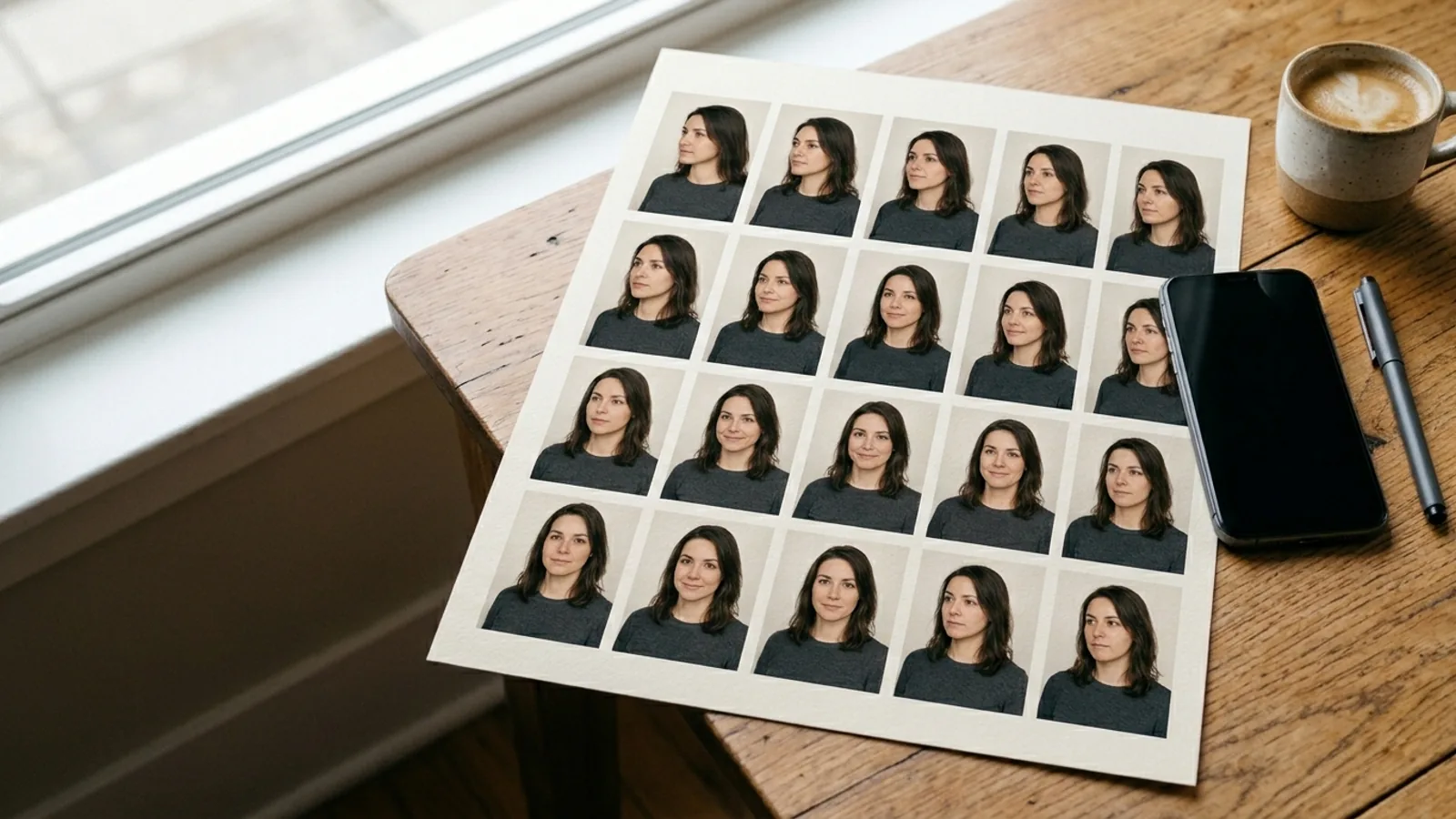
Upload 10–15 clear photos of yourself. Use different angles, natural light, and minimal filters. Avoid sunglasses, group photos, heavy makeup filters, and images where your face is partially covered. The input quality sets the ceiling for the result.
#2. Follow the generation flow
The current workflow asks for mode, gender, age, body type, and style guidelines before you upload and review your photos. Take a minute on these choices: the goal is a professional image that still looks like you, not a completely different persona.
#3. Pick a package
Nothron offers 25, 50, and 100 headshot packages, with 1 credit per render. If you only need one strong CV photo, a smaller package is enough; if you want options for LinkedIn, a portfolio, and different markets, a larger package gives you more room to compare.
#4. Review for likeness first
Before judging the styling, check the fundamentals: Is the face recognizably yours? Are the eyes, hairline, and skin tone consistent? Does the expression look natural? A photo that looks polished but does not look like you is not a good CV photo.
#5. Crop for the market
Use the size table above as a starting point, then crop from a high-resolution original. For Germany, a 3:4 portrait around 4.5 x 6 cm is a common convention. For France, 35 x 45 mm is common. For Spain, the carné format is 26 x 32 mm, while CVs often use a slightly larger portrait. For Portugal, 3 x 4 cm is familiar. For Turkey, a 4 x 6 to 5 x 6 cm portrait is common.
#6. Export and attach correctly
Use a text-based PDF for the CV and keep the photo file separate if the portal requests one. Check the file size and the filename. A clean, descriptive filename such as first-last-cv-photo.jpg is easier for a recruiter to manage than IMG_2048.JPG.
Nothron describes the process as taking about 10 minutes, with no subscription required. Package details and any introductory offers can change, so check the current dashboard before you start.
#Pre-Submit Checklist
Before you attach the photo, run this quick check:
- Does the job ad ask for a photo, prohibit one, or say nothing?
- Is the photo current and recognizably you?
- Is the crop correct for the country and the application format?
- Is the background clean and free of distractions?
- Is the lighting natural, with no harsh shadows?
- Is the attire appropriate for the role and the local market?
- Is the image free of heavy filters, logos, and sunglasses?
- Is the file size reasonable and the filename professional?
If you answer “no” to the first question, stop and check the ad again. The rest of the checklist only matters after you have decided that a photo belongs in the application.
#Frequently Asked Questions
#Should I put a photo on my resume?
It depends on the country and the job. In the US and UK, omit it by default unless the employer asks. In Germany, Spain, Portugal, and Turkey, a photo is usually optional but common in many sectors; in France, expectations are more mixed. Follow the job ad first. In the US and UK, a CV or resume photo is uncommon outside creative, media, acting, modeling, and some client-facing roles; if the ad requests a headshot, follow the instructions and keep the image professional and current.
#Is a CV photo required in Germany?
No. There is no legal requirement for a private-sector application, and the AGG makes photo-free applications safer for avoiding discrimination. A Bewerbungsfoto is still customary in many traditional sectors, so check the ad and the company’s culture. If you include one, a professional portrait around 4.5 x 6 cm is a common convention.
#What size should a CV photo be?
There is no single legal CV photo size. Common conventions are 4.5 x 6 cm in Germany, 35 x 45 mm in France, 26 x 32 mm carné size in Spain, 3 x 4 cm in Portugal, and a 4 x 6 to 5 x 6 cm portrait in Turkey. These are conventions, not laws. If the ad specifies a size, follow the ad.
#Does a photo hurt ATS parsing?
A photo does not usually help an ATS, and in some templates it can complicate parsing or increase file size. There is no reliable evidence that a photo improves keyword matching. Use a text-based PDF, standard headings, and a separate photo field if the portal provides one.
#Can I use an AI headshot on my CV?
Yes, if it accurately represents you and is appropriate for the role. Do not use an AI image for a passport, visa, or identity check. Avoid heavy retouching, keep your natural features, and be ready to explain the photo if asked. A natural image is safer than an obviously synthetic one.
#Is an AI headshot allowed on LinkedIn?
LinkedIn asks for a photo that reflects your likeness; AI is not automatically prohibited. A natural, accurate image is safer than an obviously synthetic or misleading one. Check LinkedIn’s current photo guidance and avoid any image that changes your identity or professional history.
#What should I wear in a CV photo?
Choose neat, industry-appropriate clothing in solid colors. Avoid loud patterns, logos, and sunglasses. A collared shirt or blazer is a safe default. Creative fields can be more relaxed, while law, finance, and medicine usually call for a more conservative look.
#Can I use the same photo for a passport or visa?
No. Passport and visa photos have strict official requirements for size, background, expression, and recency. A CV photo is a professional presentation image, not an official ID photo. Use a separate photo for official documents and follow the relevant government guidance.
#Conclusion
The resume photo question does not have a global answer. It has a local answer, a legal answer, and a practical answer.
- In the United States and United Kingdom, omit the photo by default. Follow the ad if it asks for one.
- In Germany, Spain, Portugal, and Turkey, a photo is usually optional but common in many sectors. In France, expectations are more mixed. Check the ad, respect the local convention, and keep the image professional.
- In every market, a CV photo is not a passport photo. Keep the two formats separate.
The best photo is not the most polished one. It is the one that looks like you, fits the role, and follows the application instructions. If you decide to include one, generate a natural headshot, check the likeness, and crop it to the local format before you send it.
Create a natural, resume-ready headshot with the Nothron Neural Headshot Generator — then crop it to the size your market expects.
#Explore Other Nothron Tools
Nothron is not just a headshot generator — it is a complete AI photo studio. These tools can help with the rest of the application:
#AI Tools
- Nothron Neural Engine — Sharpen, upscale, and clean up a low-resolution photo
- Nothron Natural Glow — Improve skin tone without making the face look artificial
- Nothron Legacy Touch — Restore an older photo before you crop it
#Photo Editing Tools
- Photo Editor — Adjust brightness, contrast, and background details
- Free Online Image Cropper — Crop to a specific CV or ID ratio
- Free Online Photo Resize Tool — Resize to the dimensions in a job ad
- Free Online Circle Cropper — Create a circular profile version for social platforms
#Dashboard Tools
- Nothron Neural Headshot Generator — Create professional headshots with AI
- Dashboard Neural Engine — Advanced AI photo enhancement
- Dashboard Natural Glow — AI-powered skin tone enhancement
- Dashboard Legacy Touch — AI old photo restoration
#Other Blog Posts
- Professional Headshot Guide by Profession — What to wear and how to pose for your field
- AI Headshot Authenticity and LinkedIn Rules — Likeness, disclosure, and platform policy
- Passport Photo Maker Online Guide — Official ID photo requirements
- Photo Cropping Guide — Ratios, framing, and common crop mistakes
- Top 5 AI Headshot Generators of 2026 — Compare features, styles, and pricing approaches
- LinkedIn Profile Photo Importance — Why the right profile image matters
- Best Photo Editor Comparison — Editing tools for final adjustments
- All-in-One Photo Studio — The full Nothron toolkit
#Get Started Now
Create Your First Headshot Now →
Upload 10–15 clear photos, choose your style, and generate a headshot you can crop for your CV, LinkedIn, or portfolio. Check the current offer for package details and any free-trial terms before you begin.
#Author Biography
Nothron Team is a group of AI and photo editing experts dedicated to building the best AI headshot generator and photo editing platform. With years of experience in AI technology, computer vision, and professional photography, we built Nothron as a platform where anyone can create studio-quality portraits. Our mission is to make professional photo editing accessible to everyone through advanced AI technology.
Nothron Team
The Nothron team turns experience in AI, computer vision and professional photography into a photo studio that anyone can use.
Related articles
Should You Smile in Your Headshot? What the Research Actually Says (2026)
Oct 25, 2026 · 26 min read
Professional Headshot Cost in 2026: What You Really Pay in 7 Countries
Oct 24, 2026 · 22 min read
How to Take Photos for an AI Headshot Generator: The 10–15 Photo Checklist (2026)
Oct 23, 2026 · 27 min read